The ATP Manual (Agro-ecological Toolkit) is a set of five simple, illustrated, and practical guidebooks developed through the Re-WET project. These manuals are not only for Korail. They can be used across Bangladesh in lake-edge, canal-edge, river-edge, wetland, dense settlement, and urban fringe areas.
Korail lake edge is the first demonstration site where these ideas are being tested in practice. But the methods, tools, and step-by-step guidance can be adapted to many other places in Bangladesh according to local needs and conditions.
The manuals were developed from detailed reports prepared by specialists and consultants on plants, soil, water, fish, aquatic vegetation, waste, infrastructure, and community organization. Those reports were rich in knowledge but long and technical. The ATP Manual turns that knowledge into simpler language, images, practical steps, and field-friendly guidance.
The five manuals are: Plants, Water, Waste, Infrastructure, and Community. The Plants manual explains soil preparation, plant selection, zone-based cultivation, sack cultivation, trellis farming, and non-chemical pest control. The Water manual explains fish, aquatic plants, water quality, and wetland-based food production. The Waste manual explains waste separation, composting, recycling, and turning waste into a resource. The Infrastructure manual explains low-cost, community-managed physical systems needed to support agro-ecological practice. The Community manual explains shared responsibility, regular meetings, decision-making, collective care, and local leadership.
The main purpose of the ATP Manual is to make expert knowledge accessible to ordinary people and field-level users. It is designed so that local communities, steward groups, NGOs, city authorities, researchers, and practitioners can understand it, use it in training, and adapt it to their own areas.
In simple terms, the ATP Manual (Agro-ecological Toolkit) is a practical guide for restoring and caring for Bangladesh’s lake-edge, canal-edge, river-edge, and wetland environments by bringing together plants, water, waste, infrastructure, and community action. It supports environmental restoration, food production, cleaner surroundings, livelihoods, and collective stewardship.
ATP Manual (কৃষি-পরিবেশ নির্দেশিকা) হলো রি-ওয়েট প্রকল্পের তৈরি করা পাঁচটি সহজ, ছবিসহ ব্যবহারযোগ্য নির্দেশিকা। এগুলো শুধু কড়াইলের জন্য নয়; বাংলাদেশের বিভিন্ন লেকপাড়, খালপাড়, নদীপাড়, জলাভূমি, ঘনবসতিপূর্ণ বসতি এবং শহরের প্রান্তিক এলাকায় ব্যবহার করা যেতে পারে।
কড়াইল লেকপাড় এই নির্দেশিকাগুলোর প্রথম বাস্তব প্রয়োগের জায়গা। কিন্তু এর ভেতরের ধারণা, পদ্ধতি এবং ধাপে ধাপে কাজের নির্দেশনা বাংলাদেশের আরও অনেক জায়গায় স্থানীয় বাস্তবতার সঙ্গে মিলিয়ে ব্যবহার করা সম্ভব।
প্রথমে রি-ওয়েট প্রকল্পে বিভিন্ন বিশেষজ্ঞ ও পরামর্শকরা গাছ, মাটি, পানি, মাছ, জলজ উদ্ভিদ, বর্জ্য, অবকাঠামো এবং কমিউনিটি সংগঠন নিয়ে বিস্তারিত রিপোর্ট তৈরি করেছিলেন। কিন্তু সেই রিপোর্টগুলো ছিল বড় এবং অনেকটা কারিগরি। তাই সেই জ্ঞানকে সহজ ভাষা, ছবি, ধাপে ধাপে নির্দেশনা এবং বাস্তব উদাহরণের মাধ্যমে পাঁচটি ছোট নির্দেশিকায় রূপ দেওয়া হয়েছে।
এই পাঁচটি নির্দেশিকা হলো: গাছপালা, পানি, বর্জ্য, অবকাঠামো এবং কমিউনিটি। গাছপালা নির্দেশিকায় আছে মাটি প্রস্তুতি, গাছ নির্বাচন, জায়গা অনুযায়ী চাষ, বস্তায় চাষ, মাচায় চাষ এবং রাসায়নিক ছাড়া পোকা নিয়ন্ত্রণ। পানি নির্দেশিকায় আছে মাছ, জলজ উদ্ভিদ, পানি পরিষ্কার রাখা এবং জলাভূমিনির্ভর খাদ্য উৎপাদন। বর্জ্য নির্দেশিকায় আছে বর্জ্য আলাদা করা, জৈব সার তৈরি, পুনর্ব্যবহার এবং বর্জ্যকে সম্পদে রূপান্তর। অবকাঠামো নির্দেশিকায় আছে কম খরচের, কমিউনিটি-পরিচালিত ছোট ছোট প্রয়োজনীয় ব্যবস্থা। কমিউনিটি নির্দেশিকায় আছে দায়িত্ব ভাগাভাগি, নিয়মিত সভা, সিদ্ধান্ত নেওয়া, যৌথ যত্ন এবং স্থানীয় নেতৃত্ব গড়ে তোলার পদ্ধতি।
এই নির্দেশিকাগুলোর মূল উদ্দেশ্য হলো বিশেষজ্ঞদের জ্ঞানকে সাধারণ মানুষের হাতে পৌঁছে দেওয়া। এগুলো এমনভাবে তৈরি করা হয়েছে যাতে স্থানীয় মানুষ, কমিউনিটি দল, এনজিও, সিটি করপোরেশন, গবেষক এবং মাঠকর্মীরা সহজে বুঝতে পারেন, প্রশিক্ষণে ব্যবহার করতে পারেন এবং নিজের এলাকার বাস্তবতার সঙ্গে মিলিয়ে প্রয়োগ করতে পারেন।
সহজ করে বললে, ATP Manual (কৃষি-পরিবেশ নির্দেশিকা) হলো বাংলাদেশের লেকপাড়, খালপাড়, নদীপাড় ও জলাভূমি-সংলগ্ন এলাকায় গাছ, পানি, বর্জ্য, অবকাঠামো এবং কমিউনিটিকে একসঙ্গে ভেবে পরিবেশ পুনরুদ্ধার, খাদ্য উৎপাদন, পরিচ্ছন্নতা, জীবিকা এবং যৌথ যত্ন গড়ে তোলার একটি সহজ ব্যবহারিক গাইড।
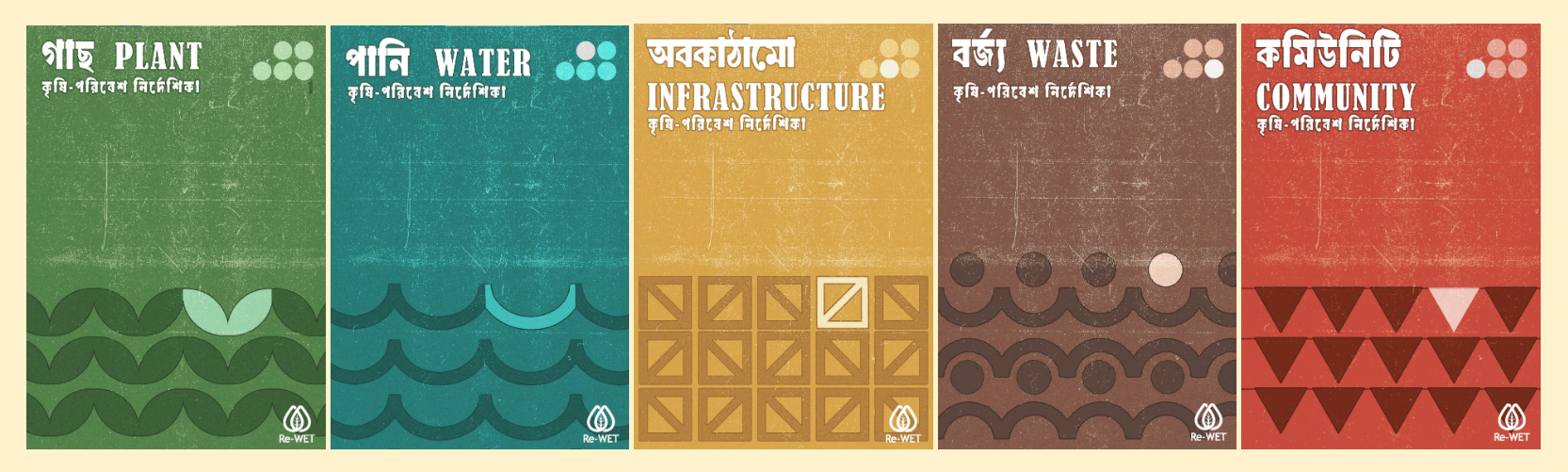
Agro-ecological Toolkit Package (ATP) Manuals
কৃষি-পরিবেশ নির্দেশিকা
কৃষি-পরিবেশ নির্দেশিকা পড়ুন বা ডাউনলোড করুন
Read or Download the ATP Manuals
Plant Toolkit / গাছ টুলকিট
The Plant Toolkit / গাছ টুলকিট is a practical guide for locally-led planting, soil care, zone-based cultivation, sack gardening, trellis farming, crop planning, and non-chemical pest control. It supports agro-ecological restoration, food production, biodiversity care, and climate resilience in lake-edge, canal-edge, river-edge, wetland, dense settlement, and urban fringe areas across Bangladesh.
Waste Toolkit / বর্জ্য টুলকিট
The Waste Toolkit / বর্জ্য টুলকিট is a locally-led implementation guide for moving from dumping and burning toward waste separation, recovery, composting, recycling, and resource use. It presents a six-step process: understanding why waste matters, separating waste at source, using designated bins, organizing collection, making compost from organic waste, and creating a recycling value chain. It shows how cleaner, drier waste can become fertilizer, income, and part of a local zero-waste economy.
Water Toolkit / পানি টুলকিট
The Water Toolkit / পানি টুলকিট is a locally-led guide for managing ponds, lake edges, shallow water zones, fish, and aquatic plants as one connected wetland system. It explains fish zoning by water depth and ecological role, aquatic plant zoning for floating, submerged, semi-aquatic, and edge plants, water purification, oxygen production, erosion control, habitat creation, floating farming, seasonal adaptation, improved water quality, biodiversity restoration, and climate-resilient food production.
Community Toolkit / কমিউনিটি টুলকিট
The Community Toolkit / কমিউনিটি টুলকিট is a locally-led governance and stewardship guide for caring for restored wetlands and shared ecological spaces. It explains committee formation, member roles, monthly meetings, shared values, fair responsibility sharing, inclusive decision-making, conflict resolution, ecological supervision, trust, ownership, and transparent communication. It presents stewardship as both a social and ecological commitment, supported by a Community Stewardship Charter for collective action, accountability, and long-term ecological ownership.
Infrastructure Toolkit / অবকাঠামো টুলকিট
The Infrastructure Toolkit / অবকাঠামো টুলকিট is a locally-led guide for building and managing simple, low-cost waste management infrastructure in dense settlements and wetland-edge areas. It explains community bins, source segregation, waste collection, composting, recycling, bin placement, rain protection, labeling, household use, collector routines, cleaner drains, reduced disease risks, less dumping into water bodies, and the shared responsibility needed to keep waste infrastructure working.